
Florida, with its sunny skies and endless coastlines, is a boater’s paradise. Whether you’re cruising along the Intracoastal Waterway, fishing offshore, or enjoying a day out on a lake. Owning a boat in the Sunshine State is a dream come true for many. However, with all the fun comes the responsibility of protecting your investment and yourself. Understanding the different types of boat insurance in Florida is essential. This will ensure you’re covered against the unexpected. In this article, we’ll explore the key boat insurance options available. Thus helping you navigate your choices with confidence.
Understanding the Importance of Boat Insurance in Florida
Boat insurance in Florida is not just a legal requirement in some cases; it’s also a critical safeguard for your financial and personal well-being. Given the state’s popularity for boating, Florida waters are often crowded, and the risk of accidents—whether caused by unpredictable weather, other boaters, or unseen hazards—remains high. Additionally, hurricanes and tropical storms are a reality for Florida residents, which can lead to significant damage or even total loss of your vessel.
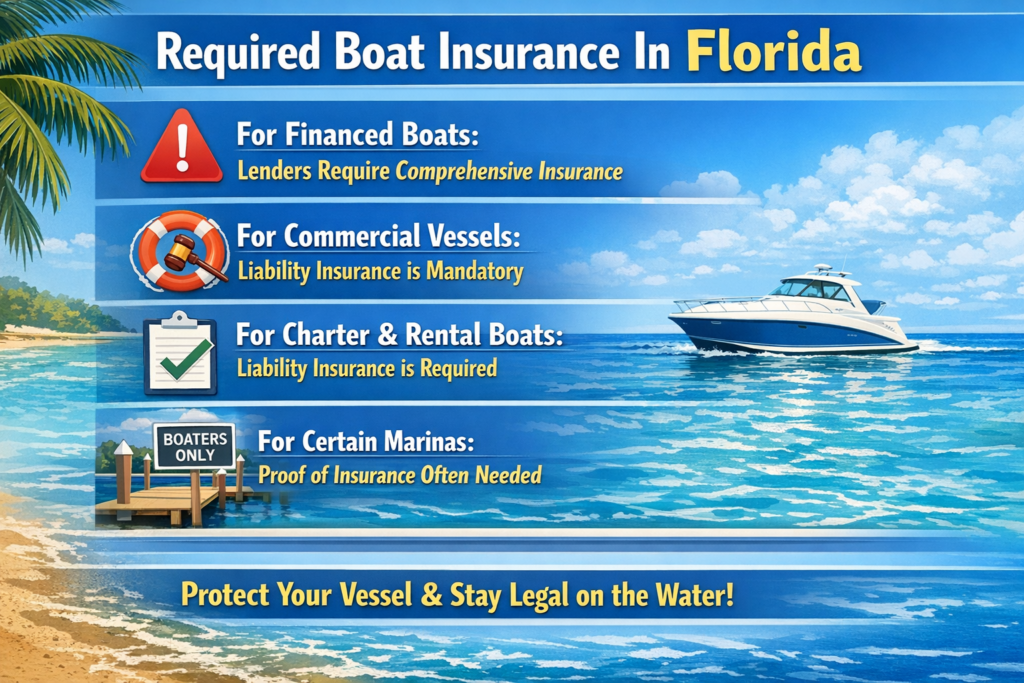
While not mandated by law for all boats, many marinas require proof of insurance before allowing you to dock. Furthermore, if you have financed your boat, your lender will almost certainly require you to carry adequate insurance coverage. This ensures that, should anything happen, both you and the lender are protected against financial loss. Uninsured boaters also risk facing costly liabilities if they cause damage to property or harm to others.
Boat insurance policies can cover a wide range of situations, from minor mishaps to major disasters. Florida’s unique boating environment means it’s particularly important to understand the different types of coverage available. And which best suits your needs. Without proper coverage, an accident or storm could turn your boating lifestyle into a financial nightmare.
Finally, boat insurance offers peace of mind. Knowing you’re protected allows you to enjoy your time on the water without worrying about the “what ifs.” Whether it’s liability protection, coverage for physical damage, or specialized policies for unique vessels, carrying the right insurance is a smart move.
Liability Coverage: Protecting Against Accidents and Injuries
Liability coverage is the cornerstone of any boat insurance policy. In Florida, where waterways are busy and accidents are not uncommon, this coverage protects you financially. Medical payments, legal fees, and repair costs can add up quickly, and liability insurance ensures you’re not left footing the entire bill.
Typically, liability insurance includes two main components: bodily injury liability and property damage liability. Bodily injury covers costs related to injuries suffered by others. Such as medical expenses or lost wages, while property damage liability pays for repairs to another boat, dock, or other structures you may accidentally harm while boating. This coverage is especially crucial in Florida, where a simple mishap can result in expensive claims or even lawsuits.
The minimum recommended liability limits can vary, but many experts suggest carrying at least $100,000 in coverage. However, given the high value of many boats and the potential medical costs involved in accident cases, many Florida boaters opt for higher limits. Or even umbrella policies that provide additional protection above and beyond standard liability limits.
It’s also important to note that liability coverage does not protect your own boat against physical damage. Instead, it’s designed to shield you from third-party claims. If you want to ensure your own vessel is protected, you’ll need to consider additional types of coverage. Such as comprehensive or collision insurance.
Comprehensive Boat Insurance: Coverage for All Risks
Comprehensive boat insurance is designed for those seeking broader protection beyond basic liability. This type of coverage protects your boat against a wide range of risks, including theft, vandalism, fire, storm damage, and other non-collision-related perils. For Florida boaters, who often face severe weather and high rates of theft, comprehensive insurance can be a wise investment.
A comprehensive policy typically covers physical damage to your own boat, including the hull, engine, and onboard equipment. If your vessel is damaged or destroyed by a covered event, your insurer will help pay for repairs or replacement, up to the policy’s limits. This is particularly valuable in Florida, where hurricanes and tropical storms can cause extensive and costly damage.
In addition to natural disasters and theft, comprehensive boat insurance may also cover incidents like sinking, striking a submerged object, or damage during transport. Some policies even include coverage for personal items on board, such as fishing gear, electronics, or watersports equipment. This added layer of protection ensures that you’re not left out of pocket after an unexpected event.
When shopping for comprehensive boat insurance in Florida, pay attention to specific policy exclusions and deductibles. Some policies may exclude certain types of losses, like wear and tear or mechanical breakdowns. While others may require higher deductibles for hurricane-related claims. Always read the fine print and discuss your options with an experienced insurance agent to ensure you’re fully protected.
Specialized Insurance for Personal Watercraft and Yachts
Florida’s diverse boating community includes owners of everything from speedy Jet Skis to luxurious yachts. Standard boat insurance policies may not offer adequate coverage for these specialized vessels. That’s where specialized insurance comes in, providing tailored protection for personal watercraft (PWCs) and luxury yachts.
Personal watercraft, such as Jet Skis and WaveRunners, are popular for their agility and adrenaline-pumping fun, but they also come with distinct risks. Specialized PWC insurance typically covers liability, physical damage, and medical payments. As well as theft and vandalism. It may also include coverage for towing and assistance. Given the higher likelihood of breakdowns with these smaller vessels.
Yacht insurance, on the other hand, is designed for larger, more valuable vessels that require higher liability limits and broader coverage options. Yacht policies often cover a wide range of risks, including crew liability, coverage for navigation in international waters, and protection for expensive onboard equipment. Policies can also include “agreed value” coverage, ensuring you receive a predetermined payout if your yacht is declared a total loss.
Both PWC and yacht insurance can be customized with add-ons such as coverage for trailers, fishing gear, or special navigational areas. If you own a personal watercraft or a luxury yacht in Florida, working with an insurer experienced in these vessels will ensure you have coverage tailored to your unique needs.
Tips for Choosing the Right Boat Insurance in Florida
Choosing the right boat insurance in Florida requires careful consideration of your vessel type, how you use it, and your budget. Start by assessing the value of your boat and the risks you face. For example, if you primarily boat in hurricane-prone areas or leave your vessel stored at a marina, prioritize policies with strong storm and theft protection.
Next, compare coverage options from multiple insurers. Look for policies that offer comprehensive protection, but also pay attention to exclusions, deductibles, and claim processes. It’s wise to select an insurer with a solid reputation for customer service and claims handling. This can make a significant difference if you ever need to file a claim.
Consider bundling your boat insurance with other policies, such as home or auto insurance, for potential discounts. Many insurers offer multi-policy discounts, which can help lower your overall premium costs. Be sure to ask about available discounts for safety equipment and boating safety courses. Finally, review your policy annually and update your coverage as needed. Changes in how you use your boat, new equipment purchases, or increased risks (such as moving to a new marina) may necessitate adjustments to your policy. By staying proactive and informed. You can ensure your boat insurance always matches your needs and provides optimal protection on Florida’s beautiful waterways.
Conclusion
Florida’s vibrant boating culture offers countless opportunities for adventure and relaxation, but it also comes with unique risks that demand proper protection. By understanding the different types of boat insurance available—liability, comprehensive, and specialized policies for personal watercraft and yachts—you can make informed decisions that safeguard your vessel, your finances, and your peace of mind.